
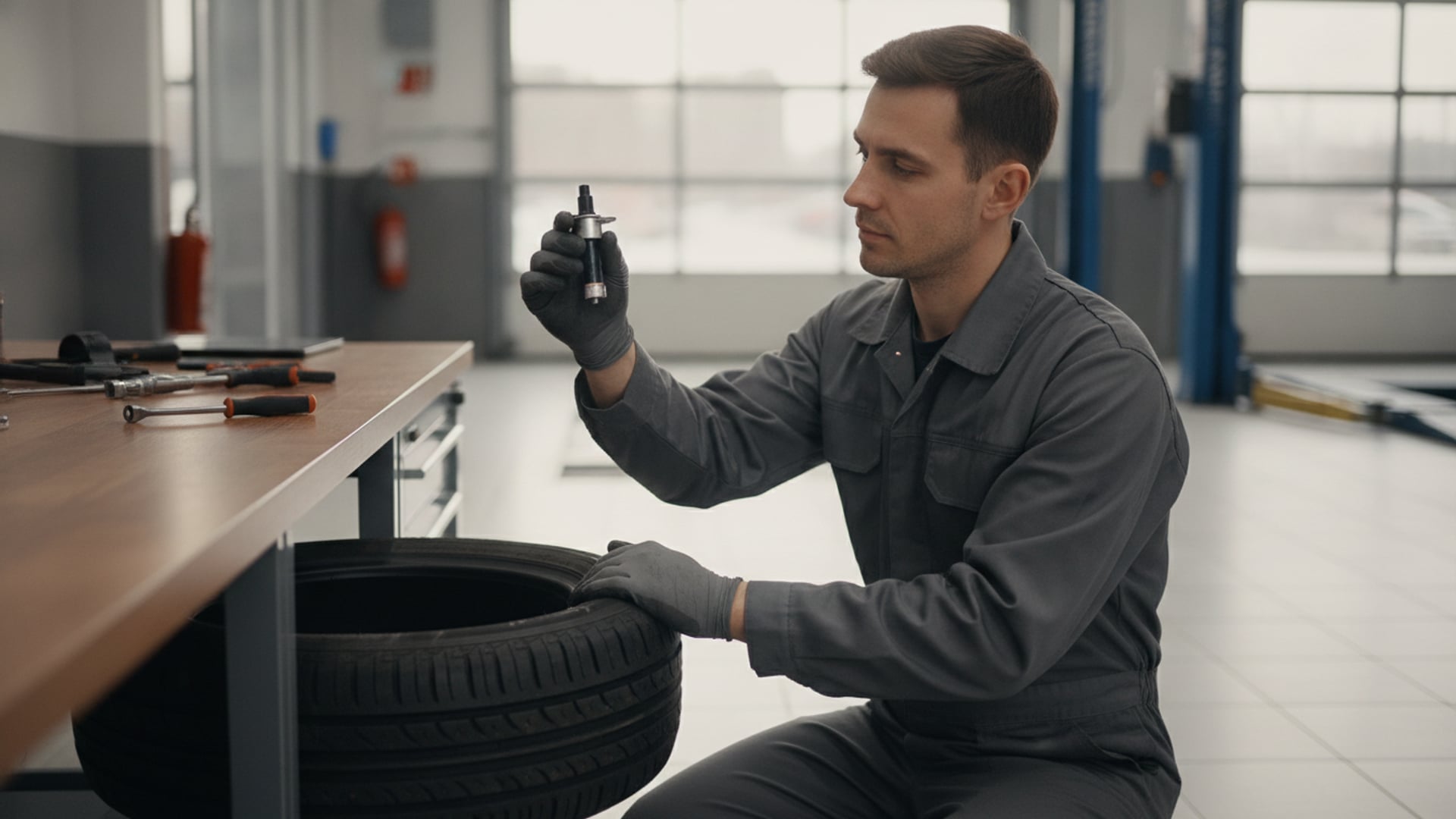
A mechanic holding a TPMS sensor while inspecting a dismounted tire on a workbench in a service garage

Is It Worth It to Replace TPMS Sensors?


 |  Last Updated:

Jun 24, 2026 @ 9:39 pm

Time To Read:

6 minutes

 |  Last Updated:

Jun 24, 2026 @ 9:39 pm

Time To Read:

6 minutes

Replacing a failed TPMS sensor costs $50–$150 per wheel, including the sensor itself, mounting/dismounting the tire, rebalancing, and the programming needed to pair the new sensor with your vehicle. In almost every case, it’s worth doing. Skipping it costs you the early warning system that catches slow leaks before they leave you stranded, and on many vehicles it means failing your next state inspection.

The decision usually isn’t “do I replace it?” — it’s “do I replace just the one that failed, or all four?” The answer depends on how old the other sensors are. TPMS sensor batteries last 5–10 years. If one has hit end-of-life, the rest are usually within a year or two of failing too.

This guide covers the actual costs, what you lose if you skip replacement, when to replace one vs. four, and aftermarket vs. OEM sensor choices.

The Quick Answer

  • Replace a failed sensor: $50–$150 per wheel total (sensor $20–$80 + labor $30–$70).
  • Worth it: almost always, unless the vehicle is on its way to junkyard within months.
  • Replace just one or all four? If sensors are 6+ years old, replace all four. Sensors don’t fail gradually; they go from working to dead. The other three are on borrowed time.
  • Easiest time to replace: when you’re replacing tires anyway. The tire is already dismounted, so labor cost drops by 50–70%.
  • OEM vs. aftermarket: aftermarket sensors (Continental REDI, Bartec, Schrader) work fine and cost half what dealer sensors do. Confirm the model is compatible with your vehicle before ordering.

What You Actually Lose Without Working TPMS

  • Early warning for slow leaks. TPMS triggers at about 25% below recommended pressure — usually 7–10 PSI low. Without it, you won’t notice the leak until the tire is visibly flat or you happen to do a manual gauge check. That can be the difference between a $25 patch and a $200 tow plus replacement tire.
  • State inspection failure. Many states (Pennsylvania, Maryland, Massachusetts, New York, Texas, and others) require TPMS to be functional to pass state inspection or safety inspection. A vehicle with an illuminated TPMS warning light fails. You can’t register or renew until it’s fixed.
  • A persistent dashboard warning light. The TPMS light stays on until the failed sensor is fixed or replaced. Beyond annoyance, it masks other warning conditions — you might miss an actually-low tire because the light was already on.
  • Insurance liability. If you’re in an accident caused by a flat tire, and your TPMS was known to be non-functional, your insurance can use it as grounds to push back on the claim. Rare but not theoretical.
  • Resale value. A buyer test-driving your car sees the warning light on the dash. That’s a price-adjustment conversation you don’t want to have.

Cost Breakdown

ComponentCost RangeNotes
OEM TPMS sensor$40–$120 eachDealer-supplied. Identical to aftermarket in function; you’re paying for the OEM packaging.
Aftermarket TPMS sensor$20–$60 eachContinental, Bartec, Schrader, Autel. Confirm compatibility with your vehicle.
Tire dismount/remount + rebalance$25–$50 per wheelShop labor. Less if done while replacing tires.
Sensor programming$0–$30 per wheelMany shops include this in the labor; some charge extra.
Total per wheel$50–$200Most common range is $80–$120 with aftermarket sensors.

When to Replace Just One vs. All Four

Replace Just One

  • Sensors are less than 4 years old. The other three should have plenty of battery life left.
  • The failed sensor was damaged externally (corrosion, impact, broken stem) rather than dying from age. Age-related failures predict age-related failures in siblings; physical damage doesn’t.
  • Money is tight and you’d rather replace one now and risk replacing another in 6–12 months than spend on all four today.

Replace All Four

  • Sensors are 6+ years old. When one battery has died, the others are usually within 1–2 years.
  • You’re already getting new tires. The labor cost to access the sensors is bundled with tire installation, so you’re paying for sensors plus minimal additional labor.
  • You drive a vehicle that fails inspection with TPMS warning on. Replacing all four removes the worry of failing again in 6 months when another one dies.
  • You plan to keep the vehicle 3+ years. The cost-per-year of fresh sensors is small over a longer ownership period.

OEM vs. Aftermarket

Aftermarket TPMS sensors (Continental REDI-Sensor, Bartec, Schrader EZ-sensor, Autel) work identically to OEM in normal use. They use the same wireless protocols and report the same data. Most are programmable to multiple vehicle makes, so a single sensor model fits a wide range of cars — which is why shops carry them.

  • Aftermarket pros: 30–60% cheaper than OEM, widely available, identical performance.
  • Aftermarket cons: some require programming (any decent shop has the tool; not a real cost). A small number of newer vehicles only accept OEM sensors due to firmware checks — confirm compatibility before ordering.
  • OEM pros: guaranteed compatibility, plug-and-play, dealer can install without programming questions.
  • OEM cons: expensive (often 2–3x the price for the same functional component).

For most vehicles, aftermarket is the better value. Ask your tire shop what they carry — they’ll usually recommend a sensor model that fits your vehicle and they have programming software for.

When to Skip TPMS Replacement

Two narrow cases where it’s reasonable to leave a failed sensor and live with the warning light:

  • The vehicle is on its last legs. Selling within months, planning to trade in, or just keeping it running until something major breaks. The replacement cost won’t be recovered in resale value or in service life.
  • You live in a state with no TPMS inspection requirement and you’re a meticulous pressure-checker who doesn’t actually need the system’s warning.

Outside of those, replacement is the correct call.

Bottom Line

Replacing a failed TPMS sensor costs $50–$150 per wheel and is almost always worth it. You’re paying for the early warning system that prevents stranded-on-the-highway flat tires, plus avoiding state inspection failures.

If your sensors are 6+ years old, replace all four at once — the others are close behind. If they’re newer or one was physically damaged, replace just the failed one. The best time to replace is when you’re already getting new tires, since the labor cost drops significantly. Aftermarket sensors work as well as OEM at half the price.

Related Guides

About The Author

Will Creech
Will Creech

Will Creech is the founder of TireGrades.com and has been immersed in the tire industry for over three decades. His expertise was shaped by growing up alongside the founder of Parrish Tire in Charlotte, NC, and later honed through a consulting contract with Discount Tire, where he developed training courses and strategic planning materials.

An active SCCA participant and lifelong automotive enthusiast, Will personally researches, writes, and produces every review on TireGrades — including 300+ companion video reviews on YouTube. His approach combines aggregated real-world owner data with deep industry knowledge to help drivers find the right tire at the right price.

YouTube Icon
LinkedIn icon
YouTube Icon
LinkedIn icon

Replacing a failed TPMS sensor costs $50–$150 per wheel, including the sensor itself, mounting/dismounting the tire, rebalancing, and the programming needed to pair the new sensor with your vehicle. In almost every case, it’s worth doing. Skipping it costs you the early warning system that catches slow leaks before they leave you stranded, and on many vehicles it means failing your next state inspection.

The decision usually isn’t “do I replace it?” — it’s “do I replace just the one that failed, or all four?” The answer depends on how old the other sensors are. TPMS sensor batteries last 5–10 years. If one has hit end-of-life, the rest are usually within a year or two of failing too.

This guide covers the actual costs, what you lose if you skip replacement, when to replace one vs. four, and aftermarket vs. OEM sensor choices.

The Quick Answer

  • Replace a failed sensor: $50–$150 per wheel total (sensor $20–$80 + labor $30–$70).
  • Worth it: almost always, unless the vehicle is on its way to junkyard within months.
  • Replace just one or all four? If sensors are 6+ years old, replace all four. Sensors don’t fail gradually; they go from working to dead. The other three are on borrowed time.
  • Easiest time to replace: when you’re replacing tires anyway. The tire is already dismounted, so labor cost drops by 50–70%.
  • OEM vs. aftermarket: aftermarket sensors (Continental REDI, Bartec, Schrader) work fine and cost half what dealer sensors do. Confirm the model is compatible with your vehicle before ordering.

What You Actually Lose Without Working TPMS

  • Early warning for slow leaks. TPMS triggers at about 25% below recommended pressure — usually 7–10 PSI low. Without it, you won’t notice the leak until the tire is visibly flat or you happen to do a manual gauge check. That can be the difference between a $25 patch and a $200 tow plus replacement tire.
  • State inspection failure. Many states (Pennsylvania, Maryland, Massachusetts, New York, Texas, and others) require TPMS to be functional to pass state inspection or safety inspection. A vehicle with an illuminated TPMS warning light fails. You can’t register or renew until it’s fixed.
  • A persistent dashboard warning light. The TPMS light stays on until the failed sensor is fixed or replaced. Beyond annoyance, it masks other warning conditions — you might miss an actually-low tire because the light was already on.
  • Insurance liability. If you’re in an accident caused by a flat tire, and your TPMS was known to be non-functional, your insurance can use it as grounds to push back on the claim. Rare but not theoretical.
  • Resale value. A buyer test-driving your car sees the warning light on the dash. That’s a price-adjustment conversation you don’t want to have.

Cost Breakdown

ComponentCost RangeNotes
OEM TPMS sensor$40–$120 eachDealer-supplied. Identical to aftermarket in function; you’re paying for the OEM packaging.
Aftermarket TPMS sensor$20–$60 eachContinental, Bartec, Schrader, Autel. Confirm compatibility with your vehicle.
Tire dismount/remount + rebalance$25–$50 per wheelShop labor. Less if done while replacing tires.
Sensor programming$0–$30 per wheelMany shops include this in the labor; some charge extra.
Total per wheel$50–$200Most common range is $80–$120 with aftermarket sensors.

When to Replace Just One vs. All Four

Replace Just One

  • Sensors are less than 4 years old. The other three should have plenty of battery life left.
  • The failed sensor was damaged externally (corrosion, impact, broken stem) rather than dying from age. Age-related failures predict age-related failures in siblings; physical damage doesn’t.
  • Money is tight and you’d rather replace one now and risk replacing another in 6–12 months than spend on all four today.

Replace All Four

  • Sensors are 6+ years old. When one battery has died, the others are usually within 1–2 years.
  • You’re already getting new tires. The labor cost to access the sensors is bundled with tire installation, so you’re paying for sensors plus minimal additional labor.
  • You drive a vehicle that fails inspection with TPMS warning on. Replacing all four removes the worry of failing again in 6 months when another one dies.
  • You plan to keep the vehicle 3+ years. The cost-per-year of fresh sensors is small over a longer ownership period.

OEM vs. Aftermarket

Aftermarket TPMS sensors (Continental REDI-Sensor, Bartec, Schrader EZ-sensor, Autel) work identically to OEM in normal use. They use the same wireless protocols and report the same data. Most are programmable to multiple vehicle makes, so a single sensor model fits a wide range of cars — which is why shops carry them.

  • Aftermarket pros: 30–60% cheaper than OEM, widely available, identical performance.
  • Aftermarket cons: some require programming (any decent shop has the tool; not a real cost). A small number of newer vehicles only accept OEM sensors due to firmware checks — confirm compatibility before ordering.
  • OEM pros: guaranteed compatibility, plug-and-play, dealer can install without programming questions.
  • OEM cons: expensive (often 2–3x the price for the same functional component).

For most vehicles, aftermarket is the better value. Ask your tire shop what they carry — they’ll usually recommend a sensor model that fits your vehicle and they have programming software for.

When to Skip TPMS Replacement

Two narrow cases where it’s reasonable to leave a failed sensor and live with the warning light:

  • The vehicle is on its last legs. Selling within months, planning to trade in, or just keeping it running until something major breaks. The replacement cost won’t be recovered in resale value or in service life.
  • You live in a state with no TPMS inspection requirement and you’re a meticulous pressure-checker who doesn’t actually need the system’s warning.

Outside of those, replacement is the correct call.

Bottom Line

Replacing a failed TPMS sensor costs $50–$150 per wheel and is almost always worth it. You’re paying for the early warning system that prevents stranded-on-the-highway flat tires, plus avoiding state inspection failures.

If your sensors are 6+ years old, replace all four at once — the others are close behind. If they’re newer or one was physically damaged, replace just the failed one. The best time to replace is when you’re already getting new tires, since the labor cost drops significantly. Aftermarket sensors work as well as OEM at half the price.

Related Guides

About The Author

Will Creech
Will Creech

Will Creech is the founder of TireGrades.com and has been immersed in the tire industry for over three decades. His expertise was shaped by growing up alongside the founder of Parrish Tire in Charlotte, NC, and later honed through a consulting contract with Discount Tire, where he developed training courses and strategic planning materials.

An active SCCA participant and lifelong automotive enthusiast, Will personally researches, writes, and produces every review on TireGrades — including 300+ companion video reviews on YouTube. His approach combines aggregated real-world owner data with deep industry knowledge to help drivers find the right tire at the right price.

YouTube Icon
LinkedIn icon
YouTube Icon
LinkedIn icon