

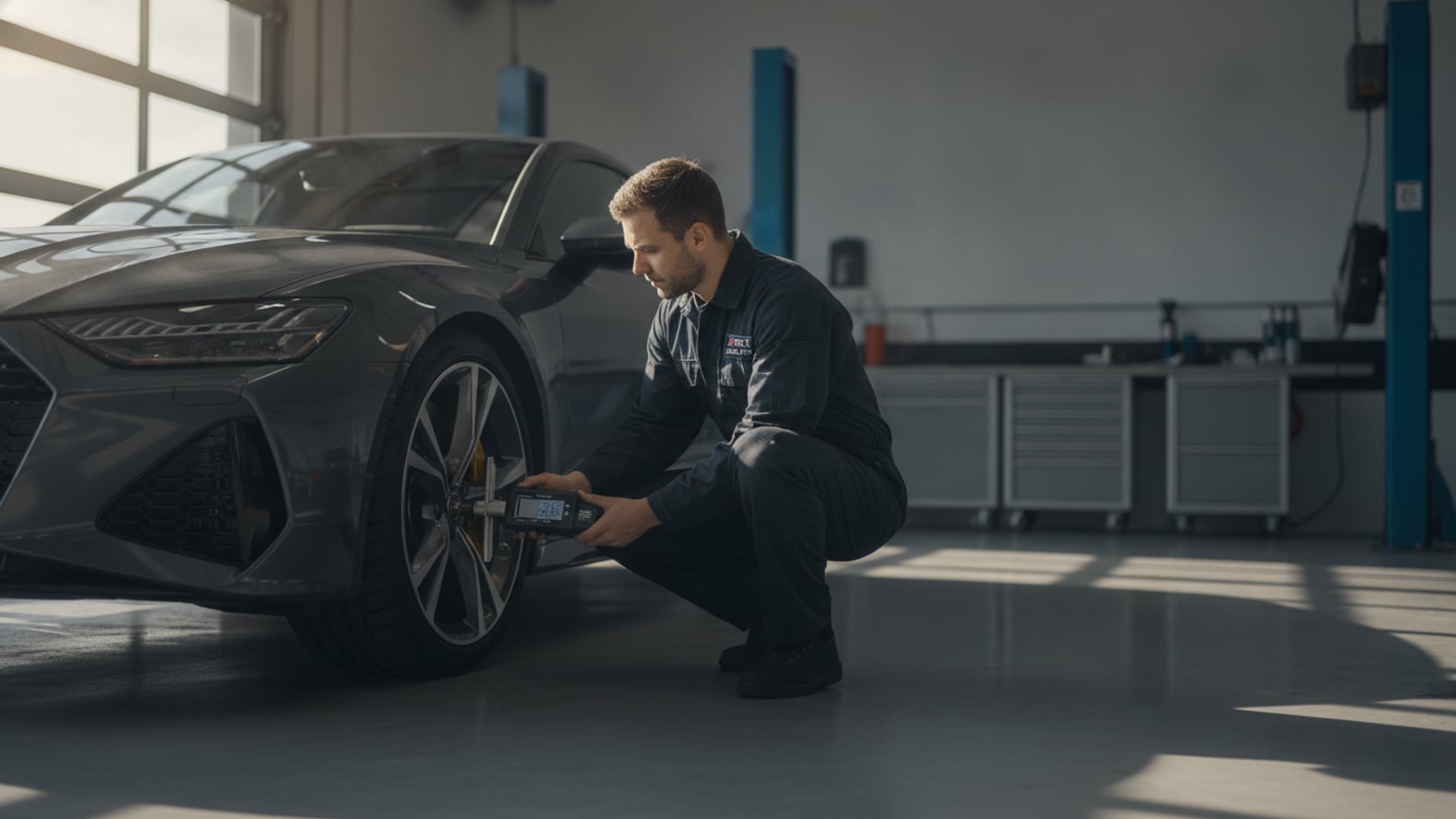
Camber is the inward or outward tilt of a wheel when viewed from the front of the vehicle. Positive camber means the top of the wheel leans outward, away from the vehicle. Negative camber means the top leans inward, toward the vehicle. Zero camber means the wheel sits perfectly vertical.
Most modern passenger cars run slight negative camber (usually 0.5° to 1.0° on each front wheel) because it improves cornering grip. Older vehicles often ran slight positive camber for highway stability under heavy loads. Performance cars and modified vehicles sometimes run substantial negative camber (2°+) for aggressive cornering at the cost of tire life.
What Each Direction Does
- Negative camber: as the vehicle leans during a corner, the outside (loaded) tire’s contact patch becomes more flat against the road. Improves cornering grip. Wears the inside edge of the tire faster during straight-line driving.
- Positive camber: spreads load to the outside of the contact patch. Good for heavy loads and rough roads (the tire conforms better to surface irregularities). Wears the outside edge of the tire faster.
- Zero camber: distributes load evenly across the tread. Best for tire life. Rarely the actual spec because the cornering benefits of slight negative camber usually outweigh the wear penalty.
Why Most Modern Cars Use Negative Camber
When a vehicle corners, body roll tilts the chassis outward. Without negative camber, the outside front tire (carrying most of the cornering load) would tilt with the body, putting its outer edge against the road and lifting its inner edge. The contact patch would be tiny.
Setting slight negative camber at rest means that under body roll, the outside tire’s contact patch flattens out instead of tilting. The full tread stays in contact with the road, giving you maximum cornering grip. The trade-off: during straight-line driving (which is most of your driving), that same negative camber puts extra load on the inside edge, wearing it faster than the rest of the tread.
OEMs balance these two by specifying small amounts (0.5°–1.0°) that give a meaningful cornering benefit without dramatically shortening tire life. The wear penalty is small enough that most drivers won’t notice it within normal tire life.
When Camber Goes Out of Spec
Camber drifts out of spec the same way toe does — pothole strikes, curb impacts, worn suspension components, sagging springs, alignment shift over time. The symptoms:
- Too much negative camber: inside edge of the tire wears dramatically faster than the outside. See the inner tire wear guide for the full diagnostic and fix.
- Too much positive camber: outside edge wears faster than the inside.
- Asymmetric camber (one wheel different from the other): vehicle pulls toward the side with more positive camber.
Adjustable vs. Non-Adjustable Camber
- Most vehicles have adjustable camber. A four-wheel alignment ($80–$150) can bring camber back to spec.
- Some Hondas, VWs, and other vehicles don’t have factory camber adjustment. Camber is set by the design of the suspension and isn’t user-adjustable without aftermarket parts (camber kits, slotted upper strut mounts, adjustable control arms).
- If camber is out of spec on a non-adjustable car: camber kits or aftermarket parts are required to bring it back. Budget $100–$300 in parts plus alignment.
Intentional Camber Choices
- Track cars often run 2°–4° of negative camber for maximum cornering grip. Tire life suffers significantly — the inside edge wears out in a few thousand street miles — but on a track they spend most of their time in corners where the camber actually helps.
- Lowered street cars often inherit excessive negative camber as a side effect of the lowered ride height. Camber kits restore spec.
- Heavy trucks under load sometimes use slight positive camber to compensate for the body squat that tilts wheels negative under weight.
Bottom Line
Positive camber leans the top of the wheel outward; negative camber leans it inward. Most modern cars run slight negative camber (0.5°–1.0°) for cornering grip. Out of spec in either direction causes one-edge tire wear; asymmetric camber causes pulling.
If you suspect camber issues, get an alignment check. Most vehicles can be brought back to spec for the price of a standard alignment ($80–$150). Vehicles with non-adjustable camber need aftermarket parts to correct severe drift.