
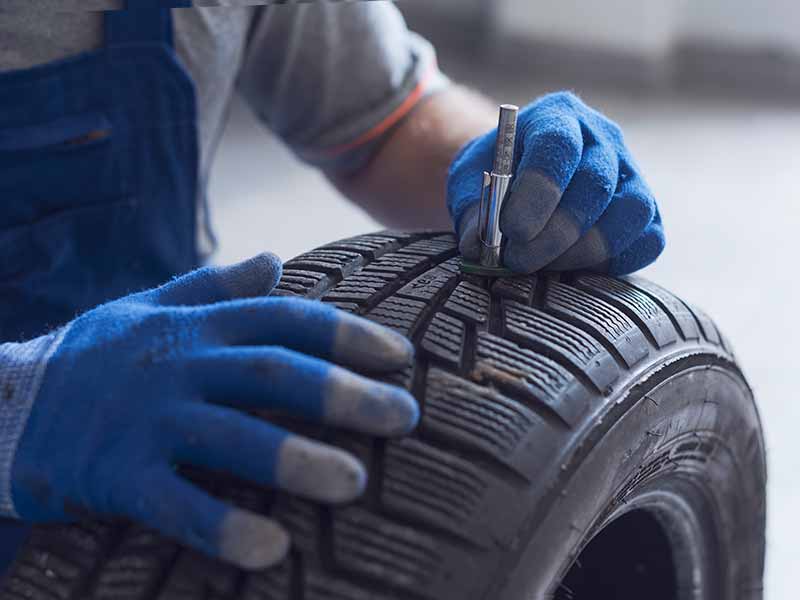
Your tire tread is the only thing connecting your vehicle to the road. A few millimeters of rubber — that’s what determines whether you stop safely in the rain or slide through an intersection.
Most drivers don’t think about tread wear until they fail an inspection or have a close call on a wet highway.
This guide covers everything you need to know: how to measure your tread, what the numbers actually mean, when to replace your tires, what causes uneven wear, and how to get the most life out of every set.
Tread Life Calculator
If you just want a quick estimate of how much life your tires have left we’ve provided a helpful tread life calculator below for your convenience.
Tread Depth Numbers You Need to Know
Tread depth is measured in 32nds of an inch. That sounds oddly specific, but it’s the standard unit across the tire industry in the U.S. Here’s what each depth range means in practical terms.
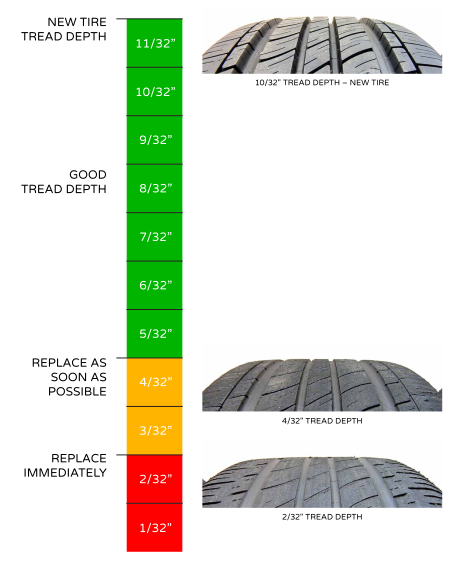
- 10/32″ to 11/32″ — New tires. This is where most passenger car and truck tires start. At this depth, the tread grooves are at their deepest, water evacuation is at its best, and wet-weather stopping distances are as short as they’ll ever be.
- 6/32″ to 9/32″ — Healthy tread. Your tires are performing well. You’ll notice a gradual increase in road noise as tread wears, and wet stopping distances are slightly longer than new, but you’re in solid shape. No action needed other than regular rotation and pressure checks.
- 5/32″ — The halfway point. Roughly half your tread life is gone. Wet-weather performance has noticeably decreased compared to new tires, but you’re still within a safe range for everyday driving. If you drive in heavy rain frequently, start paying closer attention from here on out.
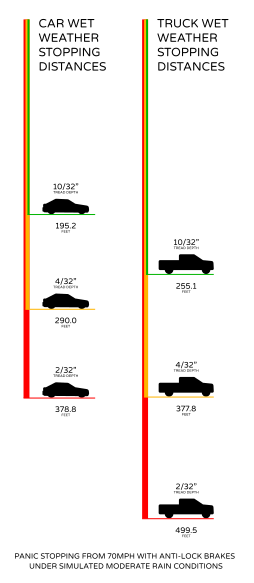
- 4/32″ — The recommended replacement point. This is where I recommend most drivers start shopping for new tires. At 4/32″, your wet stopping distance at 70 mph has increased by roughly 100 feet compared to new tires. That’s about six car lengths. You won’t notice the difference on a dry Tuesday, but the first time you have to slam your brakes on a rainy highway, you’ll feel it.
- 3/32″ — Replace soon. You’re in the zone where every 32nd of an inch makes a dramatic difference. Wet braking performance drops steeply from this point forward. If you’re actively shopping for tires, you can drive on these for a few more days. If you’re hoping to squeeze another season out of them, you’re gambling with your safety.
- 2/32″ — Legal minimum. Replace now. In 42 states, this is the legal minimum tread depth. California and Idaho allow 1/32″. Six states (Arkansas, Montana, North Dakota, South Carolina, West Virginia) have no legal minimum at all. But legal doesn’t mean safe. At 2/32″, your wet stopping distance can be double what it was when the tires were new. Your tires are essentially bald — the grooves are too shallow to move water effectively, and hydroplaning risk is extreme.
The Real-World Stopping Distance Problem
This is the part most people don’t grasp until they experience it firsthand. The relationship between tread depth and stopping distance isn’t linear — it’s exponential at the bottom end. Losing 1/32″ when you have 10/32″ of tread barely changes anything. Losing 1/32″ when you have 3/32″ can add 30 or more feet to your stopping distance on a wet road at highway speeds.
Based on wet stopping distance data from controlled testing:
Those extra 185 feet at 2/32″ are the difference between stopping safely and rear-ending the car in front of you. Or worse.
| Tread Depth | Approximate Wet Stopping Distance (from 70 mph) | Comparison to New |
|---|---|---|
| 10/32″ (new) | ~195 feet | Baseline |
| 4/32″ | ~290 feet | ~50% longer |
| 2/32″ | ~380 feet | ~95% longer (nearly double) |
Winter Tire Tread Depth: A Higher Standard
If you’re running winter tires or driving in snow, the replacement threshold is higher. I recommend 5/32″ as the minimum tread depth for winter use, not 4/32″. Snow tires depend on deep grooves and sipes to bite into snow and slush. As those features wear down, the tire loses the specific characteristics that make it effective in winter conditions. A winter tire worn to 3/32″ isn’t much better than an all-season tire on snow — and you paid a premium for winter performance you’re no longer getting.
How to Measure Your Tread Depth
There are three common methods. I’ll cover all three, but I’ll tell you upfront: buy a tread depth gauge. They cost a few dollars, they take 10 seconds to use, and they give you an actual number instead of a rough guess.
Method 1: Tread Depth Gauge (Recommended)
A tread depth gauge is a small tool with a probe that you insert into a tread groove. Push it down until the base sits flat on top of the tread blocks, then read the measurement. That’s it.
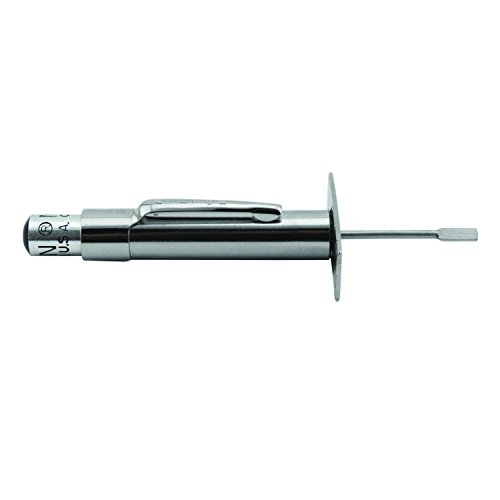
There are three types:
- Plunger-style gauges are the cheapest and most common — a sliding probe in a small housing.
- Dial gauges work the same way but display the measurement on a dial face, which I find easier to read quickly.
- Digital gauges display on a screen and measure to an unnecessarily precise degree, but they work fine.
My preference is a dial gauge. It’s easier to read than a plunger style, doesn’t need batteries like a digital, and costs around $5-10. But any type works — the important thing is that you’re measuring.
How to measure properly:
- Insert the probe into one of the main circumferential grooves — the deep, wide channels that run around the tire. Don’t measure in the smaller grooves or in the sipe cuts, as these are often shallower by design and won’t give you an accurate reading.
- Take at least three readings per tire: inside edge, center, and outside edge. This does double duty — it gives you the overall depth AND reveals uneven wear patterns. If your center reads 6/32″ but your outside edge reads 3/32″, you have an alignment problem.
- Take the shallowest reading as your actual tread depth. Your tires are only as good as their weakest point.
- Measure all four tires. Front tires often wear faster than rears (especially on front-wheel-drive vehicles), so don’t assume they’re all the same.
Method 2: The Penny Test
If you don’t have a gauge handy, a penny gives you a rough go/no-go check. Hold a penny with Lincoln’s head pointing down and insert it into a tread groove.
- If the tread covers part of Lincoln’s forehead or more, you have at least 4/32″ to 5/32″ remaining. You’re fine for now.
- If the tread reaches Lincoln’s forehead but doesn’t cover it, you’re around 3/32″ to 4/32″. Start planning a replacement.
- If you can see all of Lincoln’s head, you’re at 2/32″ or less. Replace your tires.

The penny test is convenient, but it only tells you “okay” or “not okay.” It can’t tell you exactly how much tread you have, and it won’t catch the early stages of uneven wear. Use it as a roadside sanity check, not as your primary measurement method.
Method 3: The Quarter Test
A quarter works similarly but gives you a slightly different threshold. Insert a quarter with Washington’s head pointing down.
- If the tread reaches Washington’s hairline, you have at least 4/32″ remaining.
- If it doesn’t, you’re below 4/32″ and should replace your tires.
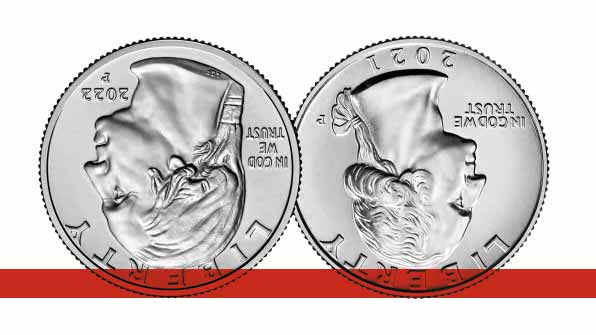
The quarter test is actually more useful than the penny test because 4/32″ is the practical replacement threshold, not 2/32″. The penny test only confirms you’ve hit the legal minimum — by which point you’re already overdue.
Wear Indicator Bars
Every modern tire has built-in wear indicators — small raised bars that sit inside the tread grooves at exactly 2/32″ height. When your tread has worn down flush with these bars, you’ve hit the legal minimum. They’re easy to spot: look for smooth, slightly raised sections running perpendicular to the tread grooves, usually at several points around the tire.
These are useful as a visual warning but they only tell you when you’ve reached 2/32″ — which, again, is later than you should be replacing your tires.
When to Replace Your Tires
Here’s my straightforward recommendation based on 30+ years around the tire industry.
Replace at 4/32″ in most cases
This is the point where wet-weather performance has degraded enough that the remaining tread life isn’t worth the safety tradeoff. You’ll squeeze maybe another 5,000 to 10,000 miles out of a tire between 4/32″ and 2/32″, and during that time your stopping distance in rain is significantly compromised. The cost savings from those extra miles is maybe $20-30 worth of tread life. That’s not a trade I’d make.
Replace at 5/32″ if you drive in snow
Winter conditions demand more aggressive tread depth, whether you’re on winter tires or all-season tires.
Replace at 3/32″ at the absolute latest
If you’re in a dry climate and it rarely rains, you can get away with running to 3/32″ — but I still don’t recommend it. Weather is unpredictable, and the one time you need emergency stopping power on a wet road, you want to have it.
Beyond Tread Depth: The 6-Year Rule
Tires have a shelf life regardless of tread depth. The rubber compounds in tires degrade over time through oxidation — a process called dry rot. Even if a tire has been sitting in a garage with full tread depth, the rubber becomes less flexible and more prone to cracking and failure after roughly six years from the date of manufacture.
Check the DOT code on your tire’s sidewall. The last four digits tell you the week and year of manufacture. “2521” means the tire was made in the 25th week of 2021. If your tires are six years old or older, replace them regardless of tread depth.
I’ve personally seen tires with 8/32″ of perfectly good tread that were cracking along the sidewall because they were seven years old. Tread depth alone doesn’t tell the whole story.
Other Signs It’s Time to Replace
Tread depth and tire age aren’t the only signs to keep an eye on. Here are a few other issues to keep in mind for when it’s time to replace your tires:
Cords or wire showing through the tread
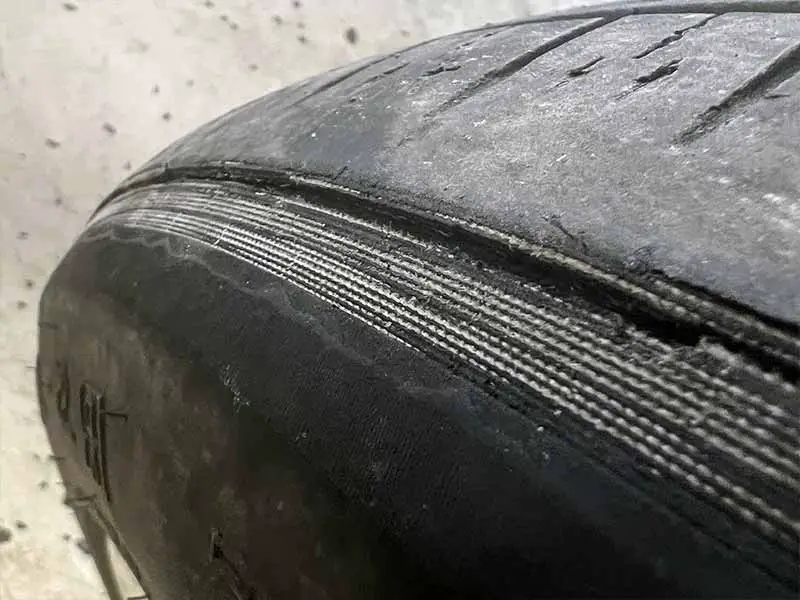
If you can see the steel belts or fabric cords through the rubber surface, you needed new tires yesterday. This is a blowout waiting to happen. Don’t drive on these — get them changed immediately.
Sidewall cracking, bulges, or bubbles
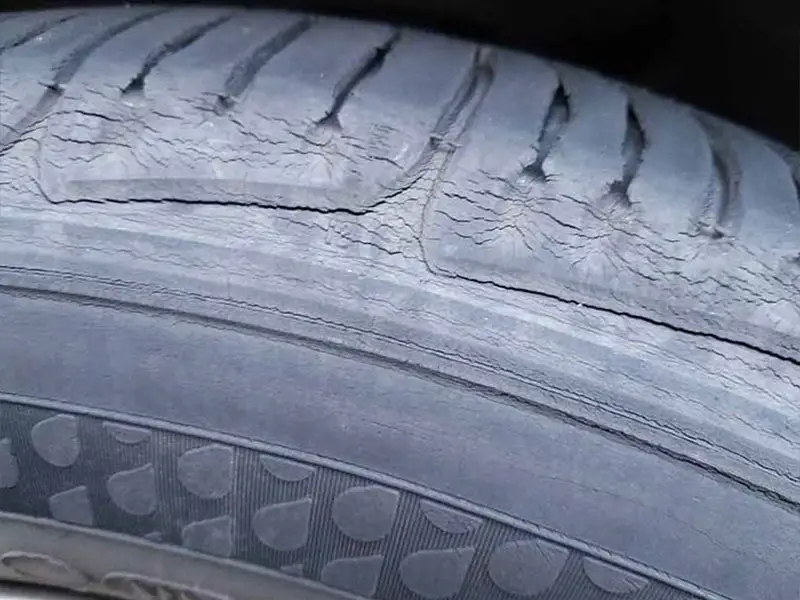
Cracks in the sidewall indicate dry rot or UV damage. Bulges or bubbles indicate internal structural damage, usually from hitting a pothole or curb. Either condition means the tire can fail without warning.
Vibration or pulling
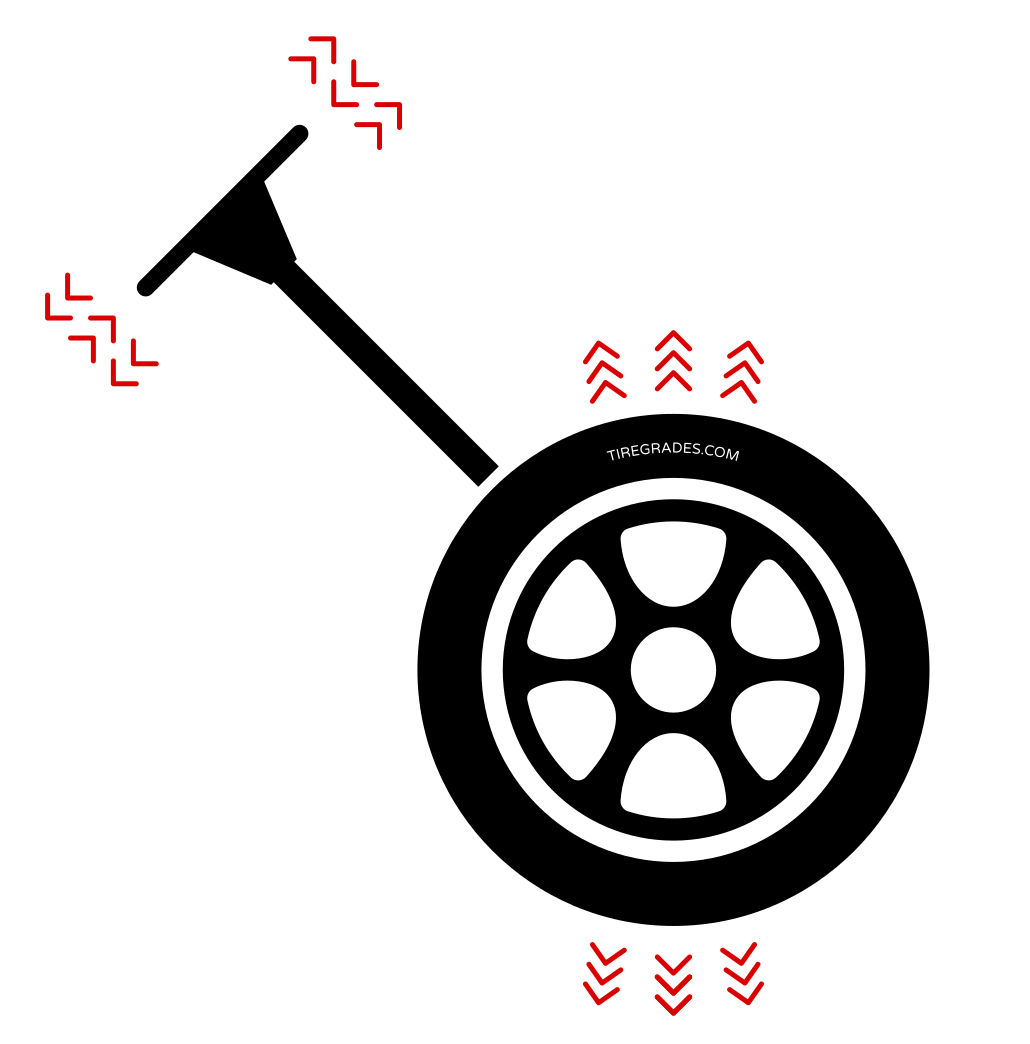
While these can indicate alignment or balance issues rather than tire failure, persistent vibration after balancing can mean internal belt separation — a serious defect that requires immediate replacement.
How to Make Your Tires Last Longer
The difference between getting 35,000 miles out of a set of tires and getting 55,000 miles often comes down to basic maintenance that most people skip.
Keep your tires properly inflated
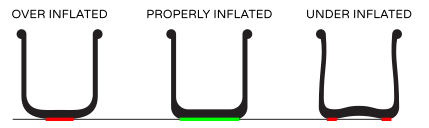
This is the single most impactful thing you can do. Underinflated tires wear faster on the edges. Overinflated tires wear faster in the center. Either condition costs you thousands of miles of tread life. Check your pressure monthly — not the number on the tire sidewall (that’s the maximum), but the number on the sticker inside your driver’s door jamb (that’s the vehicle manufacturer’s recommendation).
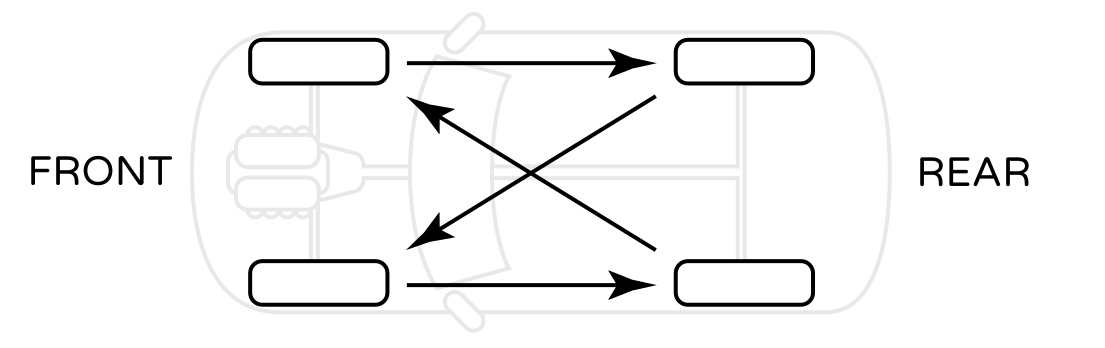
Rotate your tires every 5,000 to 7,500 miles
Front tires wear faster than rears on most vehicles, especially front-wheel-drive cars. Regular rotation evens out the wear so all four tires last roughly the same amount of time. Skipping rotation can cost you 20-30% of your tires’ total lifespan. Most tire shops do it for free or cheap if you bought your tires there.
Keep your alignment in check
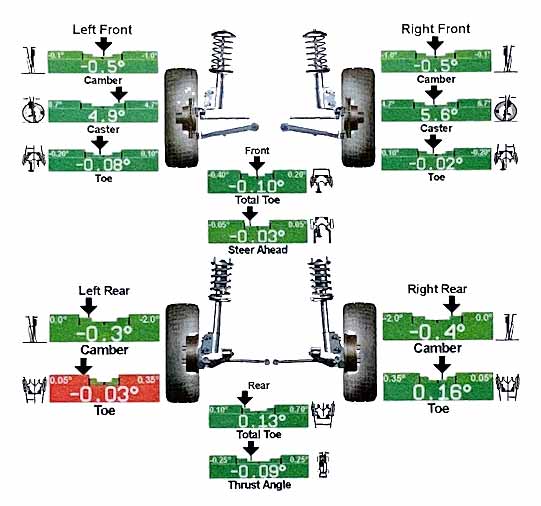
A misaligned vehicle will chew through one edge of your tires far faster than normal. If you notice your car pulling to one side, or if you see uneven wear on your tread, get an alignment check. An alignment costs $75-100. A premature set of tires costs $600-1,000.
Don’t ignore vibrations
A persistent vibration usually means a wheel is out of balance. Unbalanced wheels create uneven wear patterns — specifically cupping or scalloping — that can’t be undone once they’ve developed.
Drive like your tires cost money
Because they do. Aggressive acceleration, hard braking, and fast cornering all accelerate tread wear. I’m not saying you need to drive like a grandparent, but being aware that every hard stop costs you tread life helps you make better decisions on the road.
A Note on Mileage Warranties
Most tires come with a mileage warranty from the manufacturer — commonly 40,000, 60,000, or 80,000 miles. If your tires wear out before reaching the warranted mileage, you can get a prorated credit toward a replacement set.
The key word is prorated. If you have 60,000-mile tires that wear out at 45,000 miles, you get credit for the 25% of life you didn’t receive — not a free set. You’ll also need proof of regular rotation (usually every 5,000-7,500 miles) and documentation that the tires were properly maintained. No rotation records, no warranty claim.
Uneven Wear Patterns and What They Mean
If you’re measuring tread depth at three points across the tire (inside, center, outside) like I recommended, you’ll catch uneven wear early. Here’s what each pattern tells you.
Center Wear
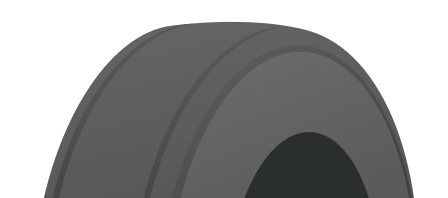
- What it looks like: The center of the tread is worn down more than the edges.
- What it means: Your tires are overinflated. Too much air pressure causes the tire to ride on the center of the tread, concentrating all the wear in a narrow strip down the middle.
- How to fix it: Reduce tire pressure to the vehicle manufacturer’s recommended PSI (the sticker inside your driver’s door jamb). Check monthly, as temperature changes affect pressure — tires lose about 1 PSI for every 10°F drop in temperature.
Edge Wear (Both Sides)
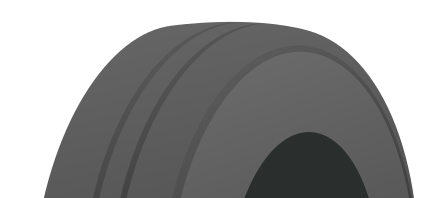
- What it looks like: Both the inside and outside edges are worn more than the center.
- What it means: Your tires are underinflated. Not enough air pressure causes the tire to sag and ride on its edges, wearing them down faster.
- How to fix it: Inflate to the recommended PSI. If you’re consistently losing pressure, have the tires checked for slow leaks and make sure your valve stems are in good condition.
One-Side Wear
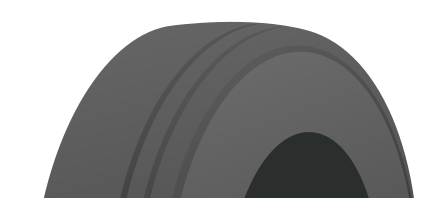
- What it looks like: Either the inside or outside edge is significantly more worn than the rest of the tread.
- What it means: Your vehicle is out of alignment. The wheels are pointed slightly inward or outward, causing one edge to scrub against the road surface with every mile.
- How to fix it: Get a wheel alignment. This is one of the most common and most expensive wear patterns — a misalignment can cut your tire life in half. If you notice this early, an alignment correction will stop further damage. If the wear is already severe, you’ll need to replace the affected tires and then get the alignment done before mounting the new ones.
Cupping or Scalloping
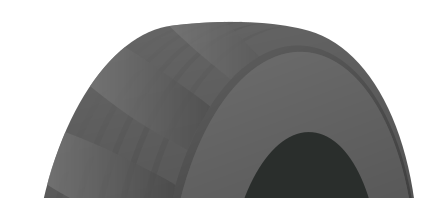
- What it looks like: Dips or scalloped patterns around the tread, almost like someone scooped out sections at regular intervals.
- What it means: Usually a suspension or balance issue. Worn shocks, struts, or bushings cause the tire to bounce slightly as it rolls, creating a pattern of high and low spots in the tread.
- How to fix it: Have your suspension inspected first, then get the wheels balanced. Replacing tires without fixing the underlying suspension issue means the new tires will develop the same pattern.
Feathering
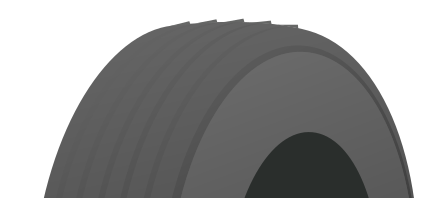
- What it looks like: The tread ribs feel smooth when you run your hand in one direction but rough or sharp in the other, like the teeth of a saw.
- What it means: A toe alignment issue. The wheels are slightly angled relative to each other, causing each tread rib to be shaved at an angle as it contacts the road.
- How to fix it: Toe adjustment as part of a wheel alignment. Feathering is subtle and easy to miss visually — running your hand across the tread is the best way to detect it.
Patchy or Spot Wear
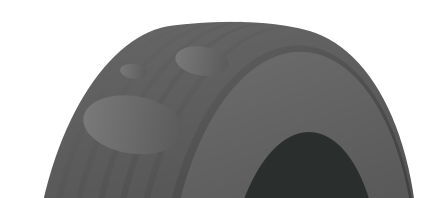
- What it looks like: Flat spots or worn patches in random locations.
- What it means: Usually indicates a balance issue, though it can also result from locking up brakes (more common in vehicles without ABS) or leaving a car parked in one position for extended periods.
- How to fix it: Have the wheels balanced. If the flat spots are severe, the tires may need replacement as the imbalance they create can be felt as vibration.
Tire Noise and Tread Wear
As tires wear, they get louder. This is normal — the shallower the tread grooves, the less air can move through them, which changes the acoustic properties. But not all tire noise is just wear.
- A gradual increase in road noise as your tires age is normal. Deeper treads are generally quieter. As tread wears, expect a modest increase in highway drone. This is especially noticeable on tires that were quiet when new.
- A humming or droning sound that changes with speed usually indicates uneven wear or a wheel bearing issue. If the noise changes when you sway the steering wheel slightly left or right at highway speed, it’s likely a wheel bearing. If the noise is consistent regardless of steering input, it’s probably the tires.
- A thumping or rhythmic beat suggests a flat spot, internal belt separation, or severely cupped tread. This is worth investigating immediately, as belt separation is a safety concern.
- A roaring sound that increases with speed is often caused by aggressive or cupped tread wear. If the noise appeared gradually, it’s likely wear-related. If it appeared suddenly, check for debris stuck in the tread or possible tire damage.
If you’re unsure whether tire noise is normal wear or a symptom of something more serious, have a tire professional take a look. A quick visual inspection can usually identify the cause.
Tools & Calculators
We’ve built several calculators to help you make data-driven decisions about your tires:
Tread Life Calculator
Enter your tire’s mileage warranty and current tread depth to estimate remaining tread life.
Tire Mileage Warranty Calculator
Estimate the value of a warranty claim if your tires wore out early.
Cost Per Mile Calculator
Compare the real cost of different tires based on price and expected lifespan.
Frequently Asked Questions
Q: Can you pass inspection with 2/32″ of tread?
A: In the 42 states that require 2/32″ minimum, yes — 2/32″ is the threshold. But just barely passing inspection doesn’t mean your tires are safe. I’d strongly recommend not waiting until inspection to address worn tires.
Q: Should I replace all four tires at once?
A: Ideally, yes — especially on all-wheel-drive vehicles where mismatched tread depths can stress the drivetrain. If you must replace in pairs, put the new tires on the rear axle regardless of which wheels are driven. This helps prevent oversteer in wet conditions. If only one tire is damaged and the others have significant tread remaining, replacing just one can work as long as the new tire closely matches the others in tread depth and size.
Q: Do front tires wear faster than rear tires?
A: On front-wheel-drive vehicles, yes — the front tires handle steering, acceleration, and most of the braking force. On rear-wheel-drive vehicles, the difference is less pronounced. Regular rotation helps equalize wear across all four tires regardless of drivetrain.
Q: Is it safe to drive on bald tires in dry weather?
A: It’s less dangerous than wet weather, but still not safe. Bald tires have reduced grip even on dry pavement, and you’re one unexpected rain shower away from a serious problem. Plus, tires worn to 2/32″ are at higher risk of punctures and blowouts because the rubber layer protecting the internal belts is extremely thin.
Q: How often should I check my tread depth?
A: At minimum, every time you rotate your tires — so every 5,000 to 7,500 miles. A monthly visual check when you check tire pressure is even better. It takes 30 seconds and can catch uneven wear early before it becomes expensive.
Q: What’s the difference between tread depth and tread life?
A: Tread depth is the physical measurement of how much tread rubber remains. Tread life is an estimate of how many miles your tires will last based on their current wear rate. Our Tread Life Calculator converts one to the other.
Have questions about a specific tire’s tread wear performance? Every tire review on TireGrades includes treadwear ratings and real-world owner feedback on longevity. Use our tire recommendation tool to see treadwear ratings for our best recommendations.
Help A Friend (& Us!) By Sharing This Article
About The Author

Will Creech is the founder of TireGrades.com and has been immersed in the tire industry for over three decades. His expertise was shaped by growing up alongside the founder of Parrish Tire in Charlotte, NC, and later honed through a consulting contract with Discount Tire, where he developed training courses and strategic planning materials.
An active SCCA participant and lifelong automotive enthusiast, Will personally researches, writes, and produces every review on TireGrades — including 300+ companion video reviews on YouTube. His approach combines aggregated real-world owner data with deep industry knowledge to help drivers find the right tire at the right price.


Related Articles