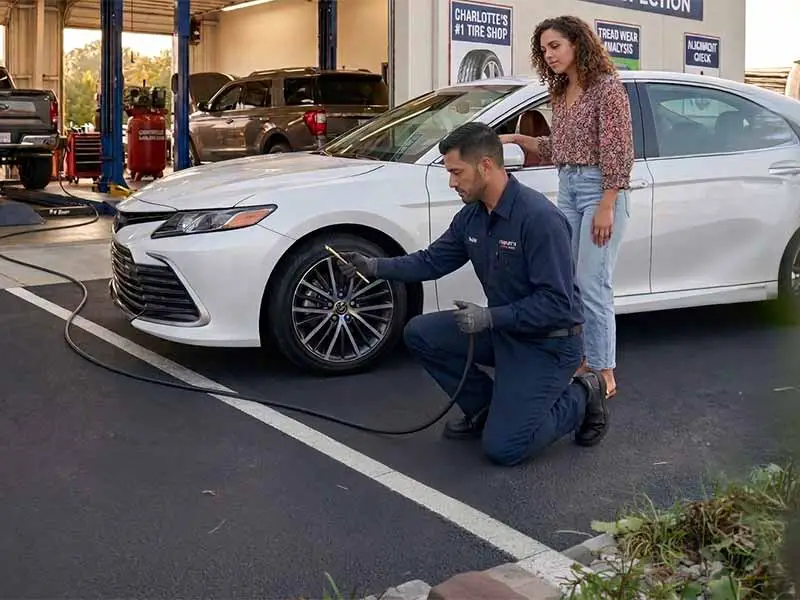
Tire pressure is the single easiest maintenance task you can do for your vehicle — and the one most people neglect. It takes 60 seconds, costs nothing, and directly affects your fuel economy, tire life, ride comfort, and safety.
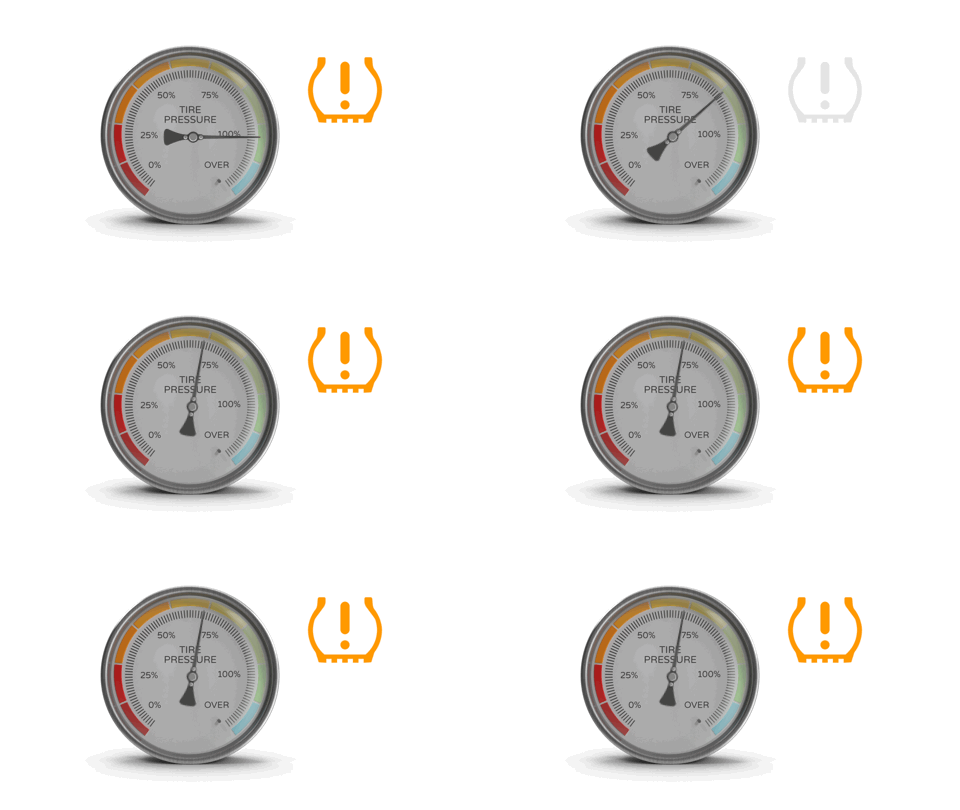
Despite that, most drivers only think about tire pressure when the TPMS warning light comes on — and by that point, the tire is already 25% below its recommended pressure. That’s too late.
This guide covers everything you need to know: what your tire pressure should be, how to check and adjust it, what causes pressure to change, how TPMS works, and how to handle special situations like heavy loads, temperature swings, and nitrogen-filled tires.
If you want to calculate how temperature affects your pressure, use our Tire Pressure Temperature Calculator.
What Should Your Tire Pressure Be?
This is the most common question, and the answer is simpler than most people think.
Use the number on the sticker inside your driver’s door jamb. Not the number on the tire sidewall. This is the single most important thing to understand about tire pressure, and it’s the source of more confusion than anything else in the tire world.
The number on the tire sidewall (often 44 PSI, 50 PSI, or 51 PSI) is the maximum inflation pressure — the absolute highest amount of air the tire can safely hold. It’s a safety limit, not a target. Think of it like a speed limiter — just because your car can go 120 mph doesn’t mean you should drive at 120 mph.
The number on the sticker in your door jamb (typically 30–35 PSI for passenger cars) is the recommended tire pressure — the optimal pressure your vehicle’s engineers determined through extensive testing. This accounts for your vehicle’s weight, suspension design, handling characteristics, and the balance between ride comfort, tire wear, and fuel economy.
These are usually different numbers. A tire with a 51 PSI maximum might have a recommended pressure of 32 PSI. That’s not a mistake — that’s by design.

Typical Recommended Pressures
- Passenger cars (sedans, hatchbacks, coupes): Usually 30–35 PSI. Most modern sedans spec around 32 PSI front and rear, though some differentiate between front and rear pressures.
- Crossovers and small SUVs: Usually 32–36 PSI. These vehicles are heavier than sedans, so they tend to run slightly higher pressures.
- Trucks and large SUVs: Usually 35–45 PSI, depending on the vehicle’s weight and tire size. Trucks designed for hauling often spec higher rear pressures.
- These are generalizations. Always defer to your specific vehicle’s door jamb sticker or owner’s manual. Even within the same model, different trim levels or tire size options can have different recommended pressures.
Where to Find Your Recommended Pressure
Check these locations in order. The first one you find is the one to use:
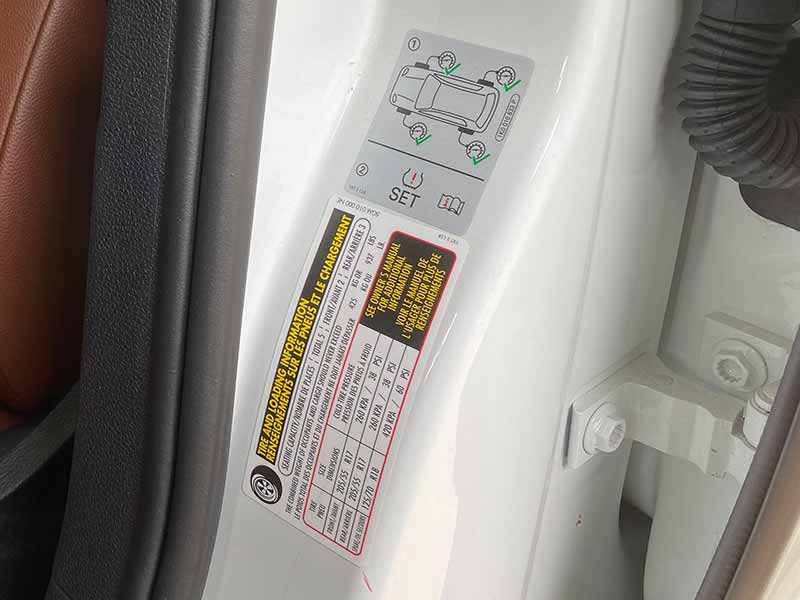
The tire information sticker on the driver’s side door jamb — this is the most common location and the easiest to find. It lists recommended pressures for front and rear tires, and often includes a separate recommendation for heavy loads.
Your owner’s manual — the tire maintenance section will list recommended pressures. This is your backup if the door jamb sticker is missing or illegible.
If both are unavailable (common with older or used vehicles), the tire manufacturer’s website or a quick call to a dealership for your year, make, and model will get you the right number.
How to Check and Adjust Tire Pressure
When to Check
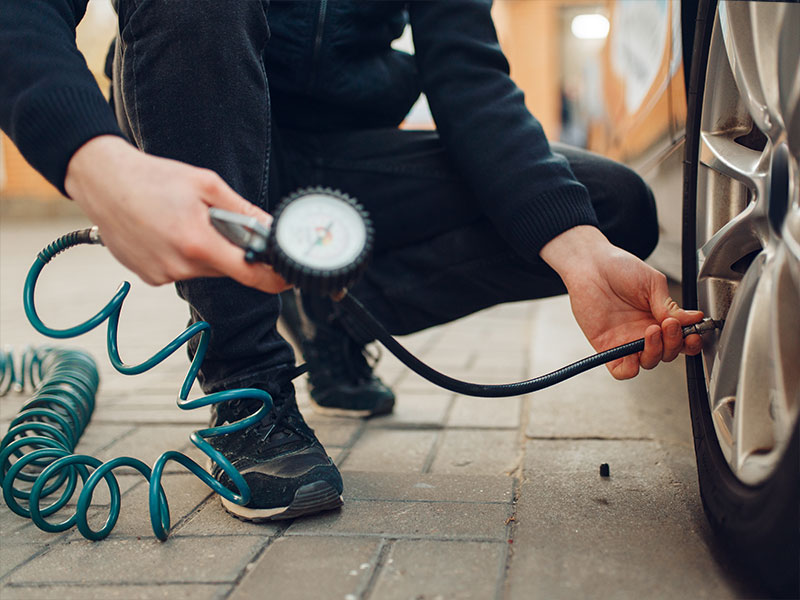
Check your pressure when the tires are cold — before you’ve driven more than a mile or two. “Cold” means the tires haven’t been heated by driving. First thing in the morning is ideal. Why? Driving generates heat through friction, which increases the air temperature inside the tire, which increases pressure. A tire that reads 32 PSI when cold might read 35 or 36 PSI after 30 minutes of highway driving. The recommended pressure on your door jamb is a cold pressure specification.
If you have to check at a gas station after driving there, know that your reading will be 2–4 PSI higher than the true cold pressure. You can subtract 2–3 PSI as a rough adjustment, but a cold reading at home is always more accurate.
How often: Monthly. Tires naturally lose about 1 PSI per month through permeation — air slowly migrating through the rubber. Temperature changes accelerate this. A tire perfectly inflated in September can be 5–6 PSI low by December if you never check it.
How to Check
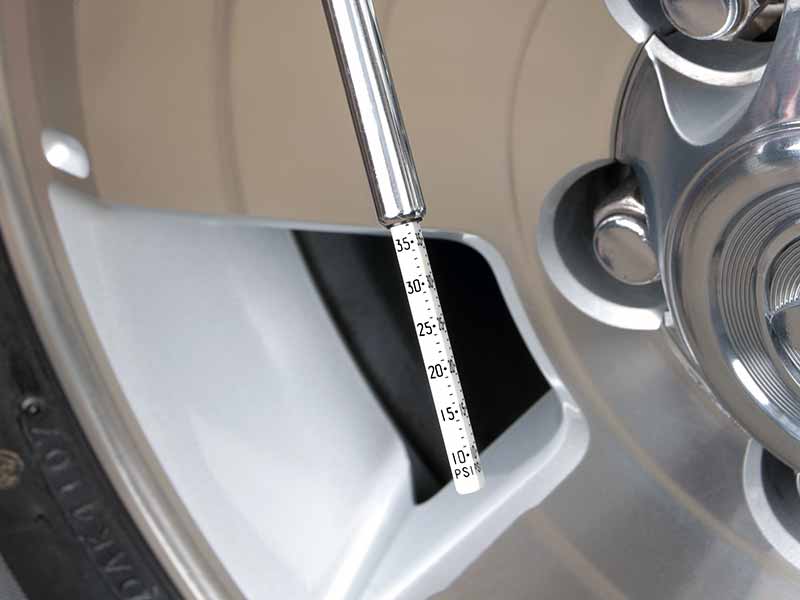
You need a tire pressure gauge. They cost $5–15 at any auto parts store and are worth every cent. Digital gauges are easy to read. Pencil-style gauges work fine but can be harder to read in low light. Dial gauges are a solid middle ground.
Remove the valve stem cap from one tire. Press the gauge firmly onto the valve stem until the hissing stops and you get a steady reading. Compare to your recommended pressure. Repeat on all four tires — don’t assume they’re all the same.
How to Adjust
- To add air: Most gas stations have air pumps. Some are free, some cost a few quarters. If you own a portable air compressor (and I strongly recommend keeping one in your vehicle), you can do this at home. Add air in short bursts, then re-check. It’s much easier to add a little more than to take excess out.
- To release air: Press the small pin in the center of the valve stem with a tool, your fingernail, or the back of the pressure gauge. Release in short bursts, check, and repeat until you’re at the target pressure.
- After adjusting: Replace the valve stem caps. They don’t hold air in — the valve does that — but they keep dirt and moisture out of the valve mechanism, which prevents slow leaks.
I recommend every driver keep a portable air compressor in their car or truck. Getting stranded with a low tire at 10 PM when no gas station air pump is nearby is a preventable problem. A decent compressor costs $30–60 and runs off your 12V outlet or cigarette lighter.
What Happens When Pressure Is Wrong
Underinflated Tires
Underinflation is far more common and more dangerous than overinflation. Here’s what happens:
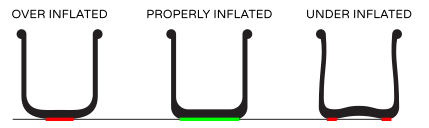
- Increased wear on the edges. When a tire is underinflated, the center of the tread lifts slightly and the edges bear a disproportionate amount of the load. This creates a distinctive wear pattern — both edges worn down while the center still has tread. Over time, this can cut your tire’s lifespan by 25% or more.
- Higher fuel consumption. Underinflated tires have more rolling resistance because more rubber is in contact with the road and the sidewall flexes excessively. Studies consistently show that tires just 5 PSI below recommended can decrease fuel economy by 2–3%. That adds up over thousands of miles.
- Longer stopping distances. The distorted contact patch of an underinflated tire doesn’t grip as effectively during hard braking, especially on wet roads.
- Heat buildup and blowout risk. Excessive sidewall flexing generates heat. This is the most dangerous consequence of severe underinflation. Heat weakens the tire’s internal structure and, in extreme cases, can cause a blowout — particularly at highway speeds in hot weather. This isn’t theoretical — tire blowouts from underinflation are a leading cause of single-vehicle highway accidents.
Overinflated Tires
Less common and less immediately dangerous than underinflation, but still problematic:
- Wear concentrated in the center. Too much pressure causes the tire to bulge outward, riding on a narrow strip down the middle. The center wears faster than the edges — the opposite pattern of underinflation.
- Harsher ride. Overinflated tires are stiffer and transmit more road imperfections into the cabin. You’ll feel every crack, seam, and pothole.
- Reduced grip. The smaller contact patch means less rubber touching the road, which reduces traction — particularly in wet conditions and during cornering.
- More susceptible to impact damage. A rigid, overinflated tire is less able to absorb impacts from potholes, curbs, and road debris. This can damage the internal belts or cause a sidewall bulge.
The Sweet Spot
The recommended pressure is the sweet spot that balances all these factors. It’s not arbitrary — your vehicle’s engineers tested extensively to find the pressure where tire life, fuel economy, handling, ride comfort, and safety are all optimized. Trust the sticker.
That said, a few PSI above or below isn’t a crisis. I’d say anything within 3 PSI of the recommended pressure is acceptable for normal driving. Outside that range, you’re starting to see measurable effects on wear and performance.
How Temperature and Driving Affect Pressure
The Temperature Rule
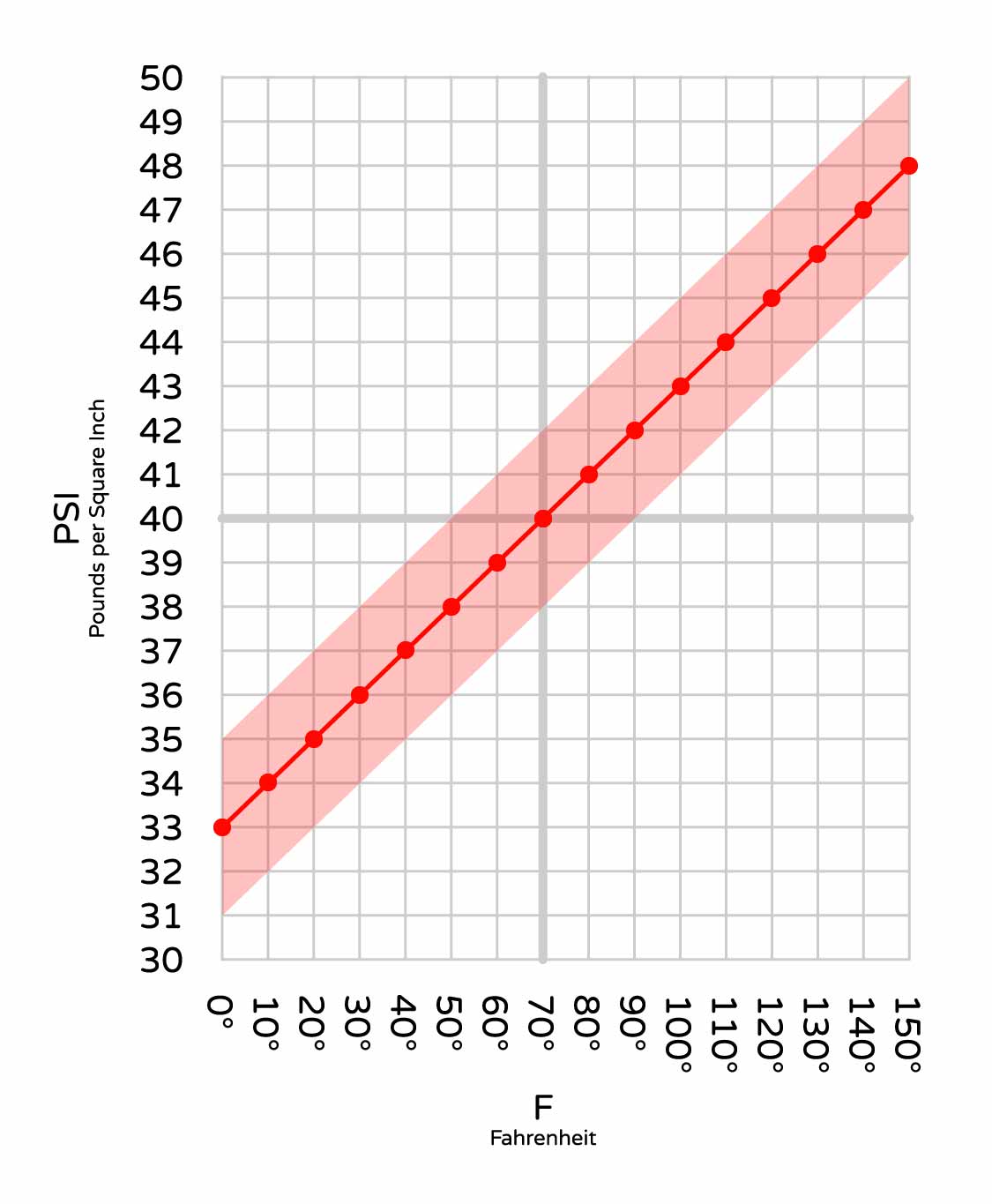
Tire pressure changes approximately 1 PSI for every 10°F change in ambient temperature. This is basic physics — air expands when heated and contracts when cooled.
What this means in practice: Tires inflated to 32 PSI in September (70°F) will read about 28 PSI on a 30°F morning in December — without a single molecule of air escaping. The air is still there, it just takes up less space.
This is why TPMS lights come on with the first cold snap of fall. Your tires didn’t develop a leak overnight — the temperature dropped 20 degrees and your pressure dropped 2 PSI, pushing you past the TPMS threshold.
The fix is simple: check and adjust your pressure with the seasonal temperature change. Top off in the fall when temperatures drop. You may need to release a couple PSI in the spring when it warms up.
Use our Tire Pressure Temperature Calculator to see exactly how a temperature change will affect your pressure.
Driving and Heat
Highway driving can increase tire pressure by 2–4 PSI above the cold reading through friction and flexing. This is normal and expected — the recommended cold pressure accounts for this increase. Do not release air from hot tires to bring them down to the cold specification. They’ll be underinflated when they cool down.
Altitude
Higher altitude means lower atmospheric pressure, which can cause your tires to read slightly higher than at sea level. The effect is small for typical elevation changes (1–2 PSI for a 5,000-foot altitude gain) but worth knowing if you’re driving from the coast to the mountains.
Use our Tire Pressure Altitude Calculator if you’re curious about the specific effect.
TPMS: Your Tire Pressure Monitoring System
Most vehicles manufactured after 2007 are equipped with TPMS — a system that monitors tire pressure and triggers a dashboard warning light when pressure drops significantly.
How It Works
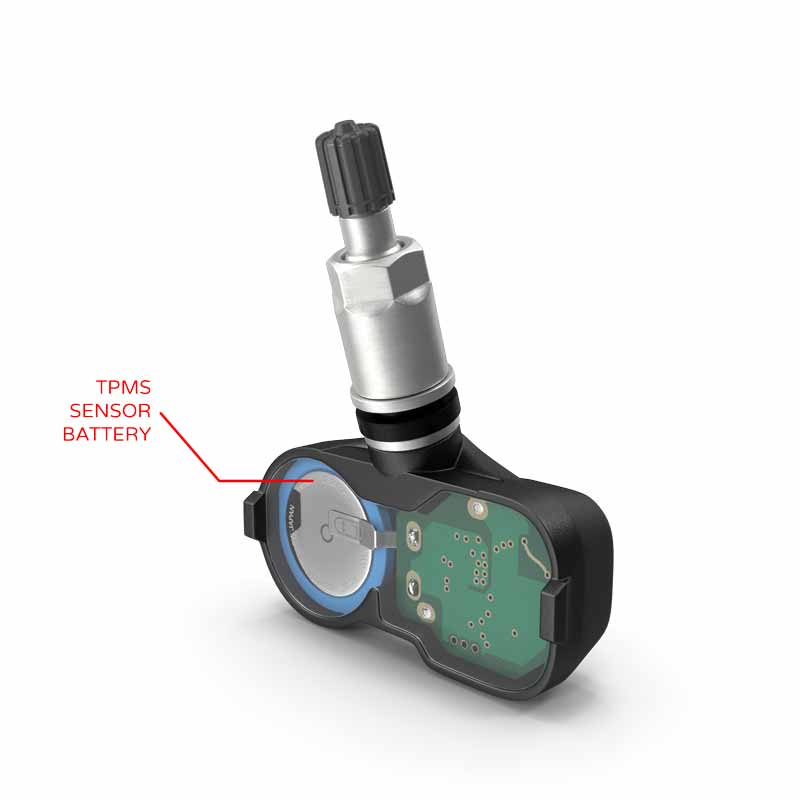
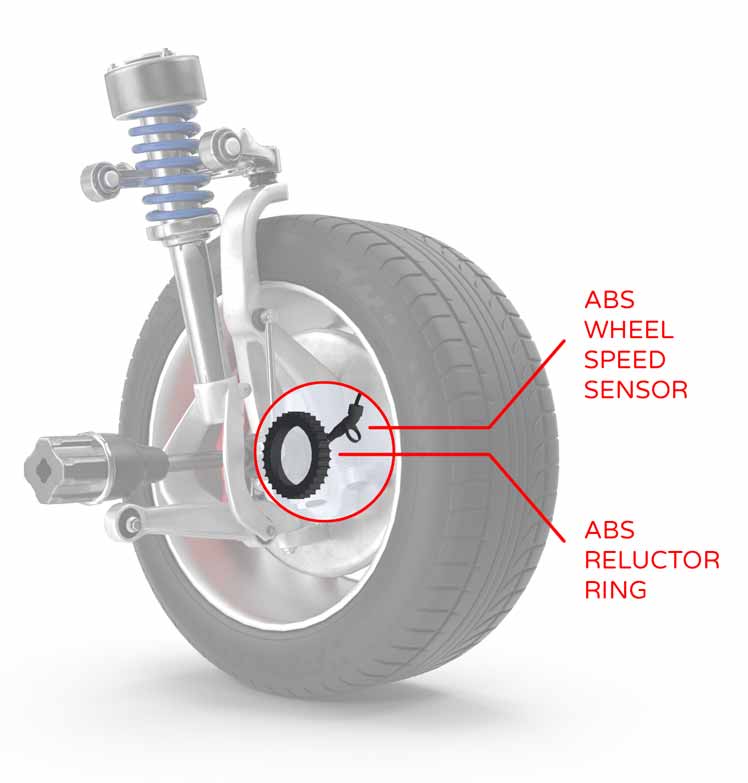
There are two types. Direct TPMS uses pressure sensors mounted inside each tire (on the valve stem or the wheel rim) that transmit real-time pressure readings to your vehicle’s computer. Indirect TPMS doesn’t use pressure sensors at all — it uses your vehicle’s ABS wheel speed sensors to detect when one tire is spinning faster than the others (which happens when it has lower pressure and therefore a smaller circumference).
Direct TPMS is more accurate and tells you which tire is low. Indirect TPMS can only tell you that something is off, not which tire or by how much.
When the Light Comes On
The TPMS warning light triggers when tire pressure drops approximately 25% below the recommended pressure. For a tire with a 32 PSI recommendation, that means the light comes on around 24 PSI. That’s already significantly underinflated.
This is important: do not rely on TPMS as your primary pressure monitoring. By the time the light comes on, your tires have already been underinflated enough to cause accelerated wear and reduced safety. TPMS is a safety net, not a maintenance tool. Monthly manual checks are still essential.
Common TPMS Problems
- Light comes on in cold weather, goes off as you drive. This is the temperature effect. Cold morning pressure dips below the threshold, driving heats the tires back above it. Top off your tires.
- Light stays on after inflation. Some TPMS systems need to be reset after adjusting pressure. Check your owner’s manual for the reset procedure — it varies by vehicle. Some reset automatically after driving a few miles at the correct pressure.
- Light flashes then stays solid. This usually indicates a TPMS sensor malfunction rather than a pressure issue. The sensor battery may be dead (they typically last 7–10 years) or the sensor itself may be damaged. A tire shop can diagnose which sensor needs replacement.
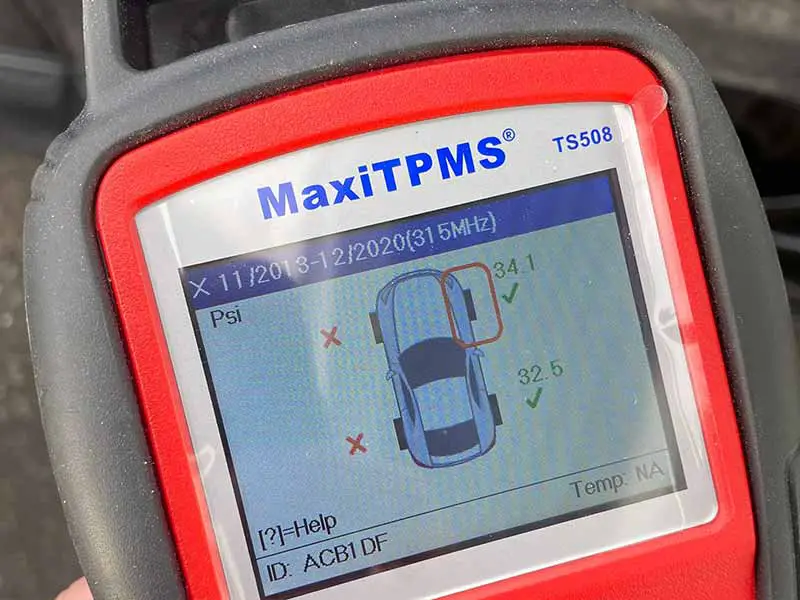
- New sensor not reading. After replacing a TPMS sensor, it often needs to be paired or “relearned” by the vehicle’s computer. Some vehicles do this automatically after driving a short distance. Others require a TPMS relearn tool. Your tire shop should handle this as part of sensor replacement.
TPMS Sensor Replacement
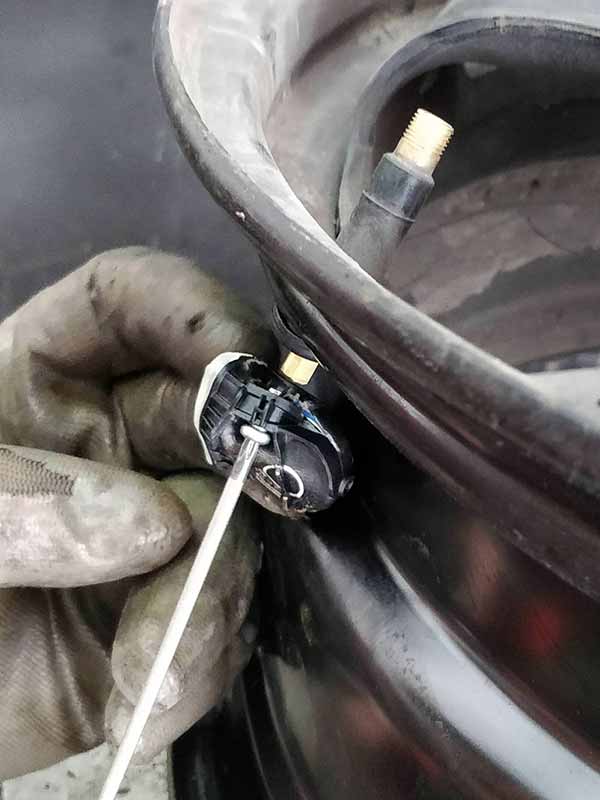
TPMS sensors have batteries that can’t be replaced — when the battery dies, you replace the whole sensor. Expect to pay $50–150 per sensor depending on the vehicle. They’re typically replaced during a tire change since the tire has to come off the rim to access the sensor. If your sensors are approaching 7–10 years old, it’s smart to replace them when you buy new tires to avoid a separate service later.
Nitrogen vs. Regular Air
Some tire shops offer nitrogen inflation, usually for an extra fee. Nitrogen molecules are slightly larger than oxygen molecules, so nitrogen permeates through the tire rubber more slowly — meaning your tires lose pressure less quickly over time.
My Honest Take
The benefit is real but small. Nitrogen-filled tires might lose 1 PSI over 2–3 months instead of 1 PSI per month with regular air. If you’re the type who checks pressure monthly (which you should be), the difference is negligible. If you’re the type who never checks until the TPMS light comes on, nitrogen gives you a slightly larger margin of safety.
I don’t think it’s worth paying extra for. Regular air is 78% nitrogen already. The incremental benefit of going to 95%+ nitrogen doesn’t justify the cost or the inconvenience of needing to find a nitrogen source every time you need to top off.
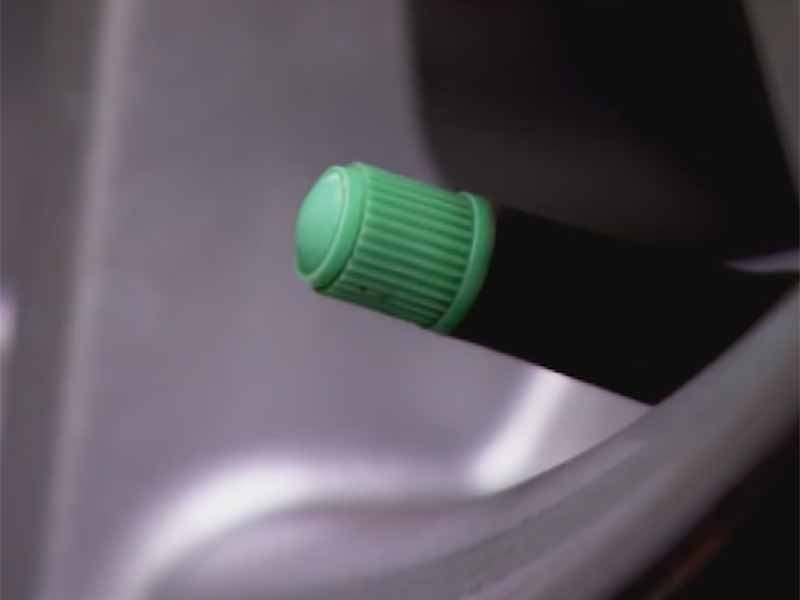
That said, if your tires already have nitrogen (indicated by green valve stem caps), there’s no reason to switch to regular air. You can top off with regular air in a pinch — mixing nitrogen and air is perfectly safe.
Checking Nitrogen-Filled Tires
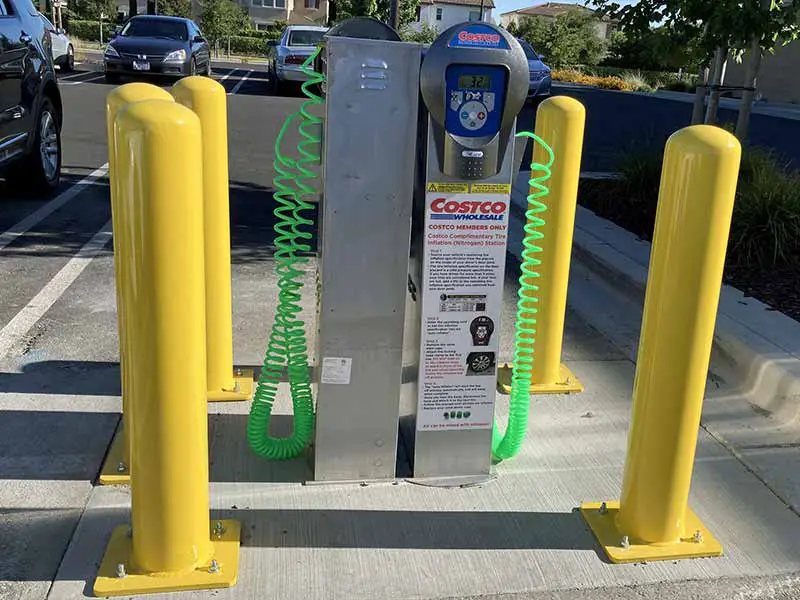
The maintenance is identical to regular air. Same recommended pressure, same checking frequency, same process. Nitrogen doesn’t change the physics — it just slows the rate of pressure loss slightly.
Special Situations
Heavy Loads and Towing
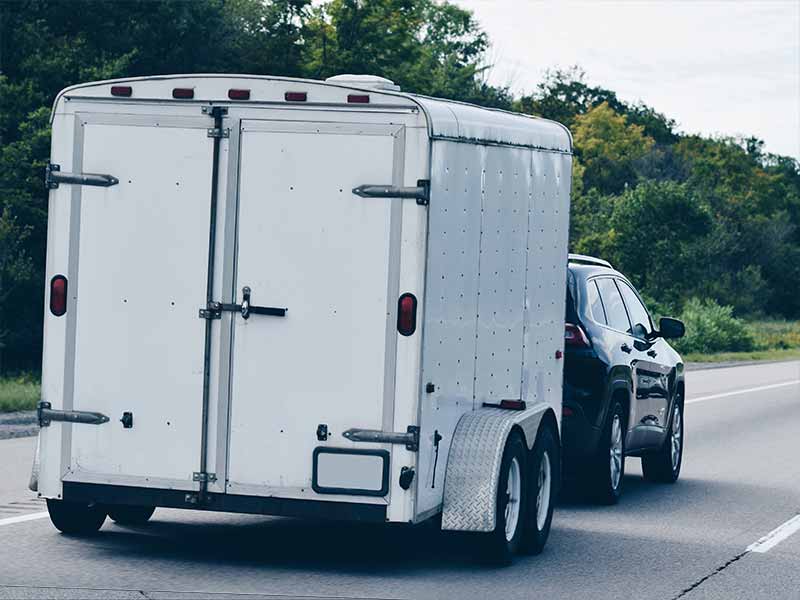
When carrying a heavy load or towing a trailer, your vehicle’s weight increases substantially. The door jamb sticker on many trucks and SUVs includes a separate recommended pressure for loaded conditions — typically 3–5 PSI higher than the standard recommendation. Always use this figure when hauling.
For trailer tires specifically, inflate to the pressure stamped on the tire sidewall (the maximum) unless the trailer manufacturer specifies otherwise. Trailer tires are rated for specific loads at specific pressures, and underinflation while towing is extremely dangerous due to the heat buildup at sustained highway speeds.
Front vs. Rear Pressure Differences
Some vehicles specify different pressures for front and rear tires — for example, 35 PSI front and 38 PSI rear on a truck. This is intentional. Different weight distribution (engine in front, empty bed in back) means the tires bear different loads. Always follow the per-axle recommendations on your door jamb sticker.
Off-Road / Sand Driving
Lowering tire pressure for off-road driving — “airing down” — increases the tire’s contact patch, which improves traction on soft surfaces like sand, mud, and snow. Typical off-road pressures range from 15–25 PSI depending on the terrain and tire.
Two critical rules for airing down: never drive on paved roads at off-road pressures (you’ll overheat the tires and destroy them), and always re-inflate to the recommended pressure before returning to the highway. Keep that portable compressor in your vehicle.
Storing Tires and Vehicles
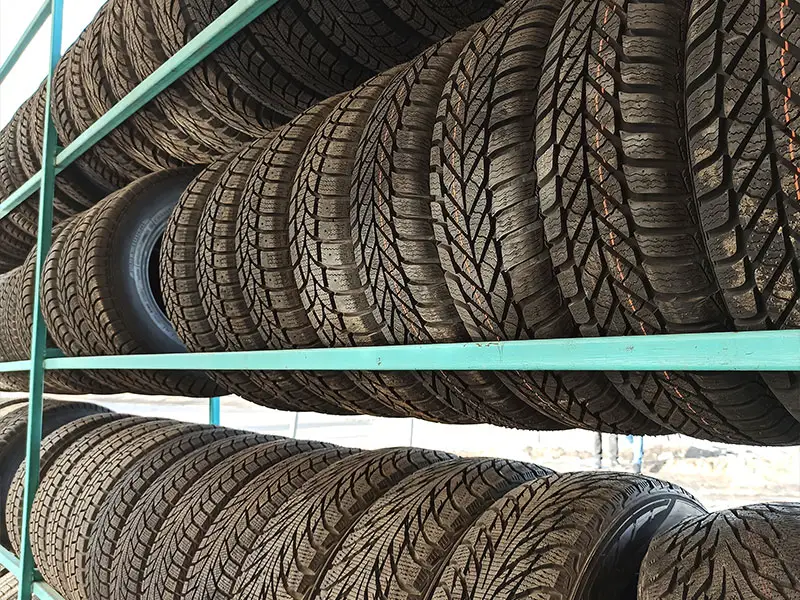
For vehicles being stored for extended periods, inflate tires to slightly above the recommended pressure (3–5 PSI above) to account for the gradual pressure loss during storage and to help prevent flat spots from the vehicle’s weight sitting on one point.
For tires stored separately (off the vehicle), inflate to the standard recommended pressure to maintain their shape without the added stress of the vehicle’s weight.
Check stored tires monthly if possible, and always verify pressure before driving after extended storage.
Frequently Asked Questions
Q: Is 40 PSI too high for my tires?
A: It depends entirely on your vehicle’s recommendation. For some trucks and SUVs, 40 PSI is the recommended pressure. For most passenger cars (which typically spec 30–35 PSI), 40 PSI would be overinflated. Check your door jamb sticker — that’s the only number that matters.
Q: Should I inflate to the max PSI on the tire sidewall?
A: No. The max PSI is a safety limit, not a recommendation. Inflating to the maximum will cause center wear, a harsh ride, and reduced grip. Always use the recommended pressure from your vehicle, not the maximum from the tire.
Q: How much does tire pressure affect gas mileage?
A: Each 1 PSI drop below the recommended pressure decreases fuel economy by roughly 0.2%. That sounds small, but at 5 PSI under across all four tires, you’re looking at roughly a 3% fuel economy penalty — which adds up to real dollars over thousands of miles.
Q: Can I use different pressures front and rear?
A: Only if your vehicle specifies different pressures for each axle. Don’t experiment with unequal pressures unless the manufacturer designed for it — it can affect handling and braking balance.
Q: My TPMS light came on. Is it safe to drive?
A: It’s safe to drive to a gas station or tire shop to check and adjust pressure, but don’t ignore it for days or weeks. A TPMS warning means at least one tire is 25% or more below its recommended pressure, which is significant.
Q: How often should I check tire pressure?
A: Monthly, minimum. Also check before long road trips, when seasons change (especially fall and spring), and whenever you’re carrying an unusually heavy load.
Q: Does tire pressure affect ride comfort?
A: Significantly. Lower pressure (within the safe range) provides a softer ride because the tire absorbs more road imperfections. Higher pressure provides a firmer ride. The recommended pressure is the manufacturer’s best compromise between comfort and performance. If you want a softer ride, look at tires designed for comfort (Grand Touring All-Season) rather than adjusting pressure away from the recommended spec.
Looking for tires with excellent ride comfort? Every tire review on TireGrades includes comfort and noise ratings based on real owner feedback. Browse our tire reviews or use our vehicle lookup to find tires rated for your specific car or truck.
Help A Friend (& Us!) By Sharing This Article
About The Author

Will Creech is the founder of TireGrades.com and has been immersed in the tire industry for over three decades. His expertise was shaped by growing up alongside the founder of Parrish Tire in Charlotte, NC, and later honed through a consulting contract with Discount Tire, where he developed training courses and strategic planning materials.
An active SCCA participant and lifelong automotive enthusiast, Will personally researches, writes, and produces every review on TireGrades — including 300+ companion video reviews on YouTube. His approach combines aggregated real-world owner data with deep industry knowledge to help drivers find the right tire at the right price.


Related Articles