
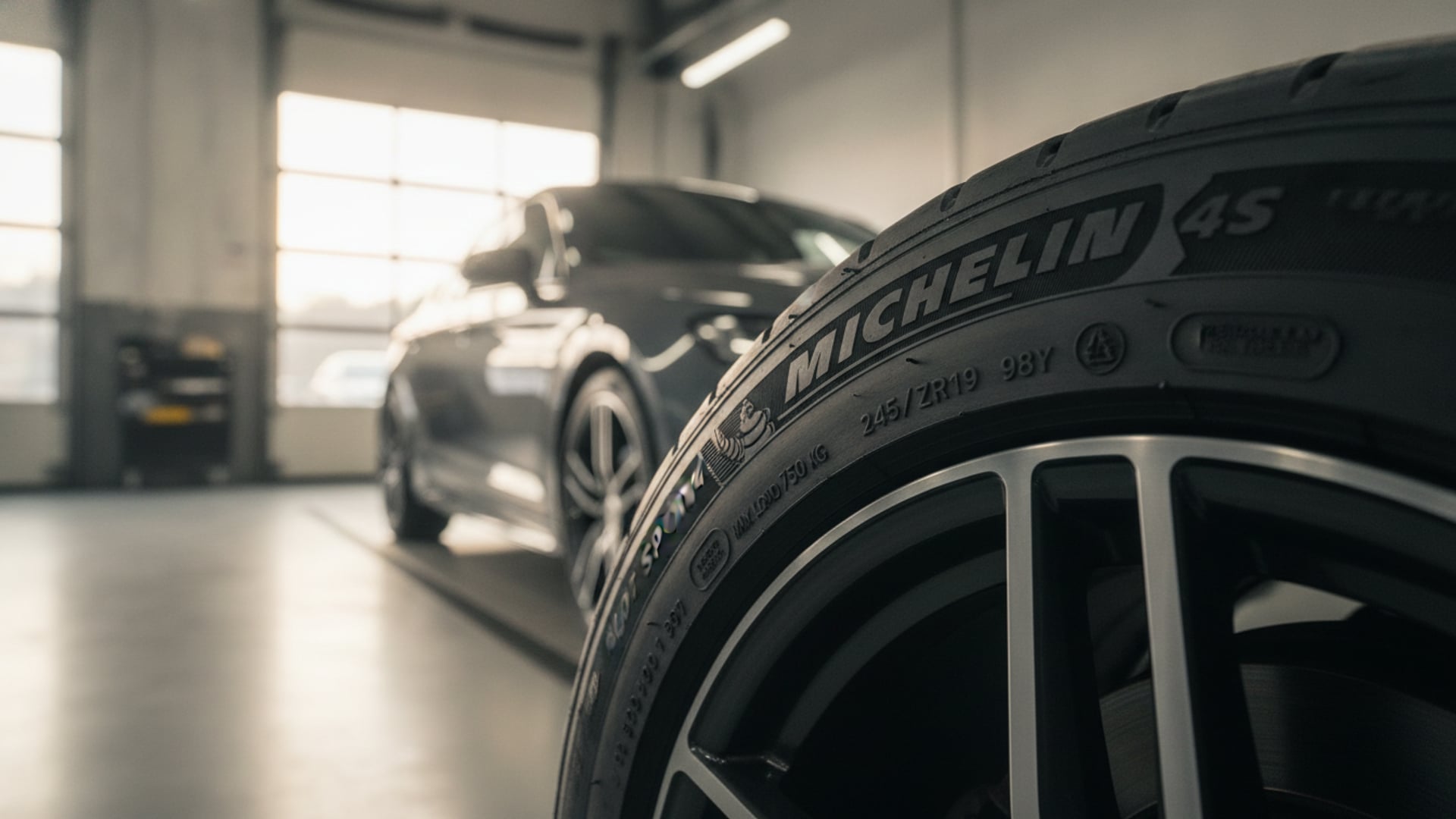
Look at the sidewall of the tire. Run-flat tires carry a specific marking that identifies them — usually one of RFT, ZP, SSR, EMT, DSST, ROF, MOE, or “Run Flat” spelled out. Each tire manufacturer uses their own abbreviation, but they all live on the outer sidewall along with the tire size and other identifying information.
If you can’t find a marking on the sidewall, the second-best clue is whether your vehicle came with a spare tire. Most vehicles equipped with run-flats from the factory don’t include a spare — the assumption is that the run-flat allows you to drive to a tire shop without one. If your trunk has no spare wheel well or no spare tire, that’s a strong hint you have run-flats.
The Marking Decoder
| Marking | Manufacturer | Notes |
|---|---|---|
| RFT | Bridgestone, Firestone | “Run-Flat Tire” — the most common generic marking |
| ZP | Michelin | “Zero Pressure” |
| SSR | Continental | “Self-Supporting Runflat” |
| EMT | Goodyear | “Extended Mobility Tire” |
| DSST | Dunlop | “Dunlop Self-Supporting Technology” |
| ROF | Multiple (often BMW OE) | “Run-On-Flat” |
| MOE / MOExtended | Mercedes-Benz OE | “Mercedes Original Extended” |
| “Run Flat” | Various | Spelled out on some tires |
The marking is molded into the rubber, usually near the tire size. Walk around the tire and inspect both sides of the sidewall — sometimes the marking is on the inside (vehicle-facing) sidewall.
Other Strong Indicators
- No spare tire in the trunk. Look for a spare tire well or compartment. If there’s no provision for a spare, your vehicle likely came with run-flats.
- Inflator kit or sealant + compressor instead of a spare. Some run-flat-equipped vehicles include an emergency inflator kit (sealant plus a 12V compressor) in the trunk as a backup.
- BMW, Mini, Mercedes, or some Lexus models from 2007+. These brands have widely used run-flats as OEM equipment. Many midrange and upper-trim models came with them standard.
- Stiff ride relative to similar cars. Run-flats have noticeably stiffer sidewalls than regular tires, producing a harsher ride. If your car feels stiffer than reviews suggested it should, run-flats might be why.
Cross-Check with the Owner’s Manual
The owner’s manual typically lists whether the vehicle came with run-flats and what the manufacturer recommends if you need to replace them. The “tires and wheels” or “specifications” section will mention RFT, run-flat, or specific marking if it applies.
Note: if your vehicle came with run-flats but a previous owner replaced them with standard tires, the manual still says run-flats but your current tires aren’t. Always trust the sidewall marking over the manual for what’s currently mounted.
Why It Matters
- Repair options. Many tire shops won’t repair run-flat tires because of the reinforced sidewall and structural concerns. If you have a flat, you may need replacement rather than a plug or patch.
- Driving with a flat. Run-flats can typically be driven 50 miles at up to 50 mph after losing pressure. Standard tires cannot — they damage themselves and the wheel within a few miles.
- Mix-and-match restrictions. You generally can’t mix run-flats and standard tires on the same vehicle. They have very different sidewall stiffness, which affects handling balance.
- Replacement cost. Run-flats typically cost 20–40% more than equivalent standard tires.
- Switching is possible but requires planning. See the guide on switching from run-flats to regular tires for what’s involved.
Bottom Line
Check the sidewall for an abbreviation like RFT, ZP, SSR, EMT, DSST, ROF, or MOE. If you find one, you have run-flats. Cross-check by looking for a spare tire — absence of a spare strongly suggests run-flats.
If you’re uncertain, any tire shop can confirm in seconds by looking at the sidewall. Knowing matters for repair options, what to do if you get a flat, and whether you can switch to standard tires later.